
By worldfood_news | 15 October 2026
India’s women farmers are central to food security, rural livelihoods and climate resilience. Yet, landlessness, unequal access to credit, invisible labour and limited decision-making power continue to hold them back. This National Women Farmers Day, the focus must shift from recognition to rights, resources and representation.
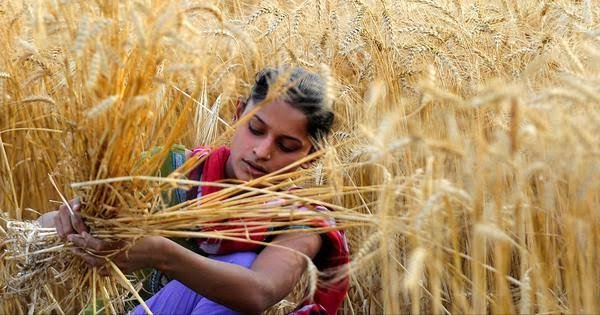
Every year on 15 October, India observes National Women Farmers Day, also known as Mahila Kisan Diwas, to recognise the contribution of women to agriculture and rural development. Coinciding with the International Day of Rural Women, the occasion offers an important opportunity to acknowledge the women who sow seeds, transplant paddy, harvest crops, manage livestock, preserve indigenous seeds and sustain household food security.
Yet, behind the recognition lies a persistent contradiction: women contribute significantly to Indian agriculture, but their identity as farmers often remains unrecognised in official records, agricultural institutions and policy decisions. They work on farms, shoulder production risks and sustain rural economies, but many lack ownership of the land they cultivate and the resources necessary to improve their livelihoods.
As India marks National Women Farmers Day in 2026, designated by the United Nations as the International Year of the Woman Farmer, the question is no longer whether women deserve recognition. It is whether that recognition can translate into meaningful economic, social and political empowerment.

The backbone of India’s agricultural economy
Women are involved in almost every stage of the agricultural value chain, from sowing and weeding to harvesting, processing, storage and marketing. Their contributions extend to dairy farming, poultry, fisheries, horticulture, agroforestry and the conservation of agricultural biodiversity.
In many rural households, women are responsible for both farm production and unpaid domestic work, including cooking, childcare, collecting water and gathering fuel. Their responsibilities become particularly demanding when male family members migrate to cities for employment, leaving women to manage agricultural operations alongside household duties.
Despite this extensive involvement, women’s work is frequently categorised as family assistance rather than independent farming. This distinction has serious consequences: the person doing much of the agricultural work may not be the person recognised by banks, government departments or markets as the farmer.
According to the Food and Agriculture Organization (FAO), women remain disadvantaged in their access to land, finance, agricultural information and higher-value agrifood markets. Addressing these inequalities is essential not only for gender justice but also for improving agricultural productivity, nutrition and food security.
The challenges women farmers continue to face
1. Limited land ownership and legal recognition
Land ownership remains one of the most significant barriers to women’s empowerment in agriculture. Although women may cultivate family land for years, agricultural records frequently remain in the names of male relatives. Widows, women whose husbands have migrated, and women heading households face particular difficulties when trying to establish their status as farmers.
Without land titles or accepted proof of cultivation, women may struggle to access institutional credit, crop insurance, compensation for crop losses and government assistance linked to land ownership.
The solution requires stronger implementation of women’s inheritance rights, greater awareness of legal entitlements, and incentives for joint or individual land registration. Equally important is the recognition of actual cultivators, including tenant farmers and women farming land they do not own. Farmer identity certificates and alternative verification mechanisms can help women access agricultural services without making land ownership the sole test of eligibility.
2. Unequal access to credit, insurance and markets
Women farmers often have fewer financial assets and less access to formal banking services. The absence of land titles can make it difficult to provide collateral, while small and fragmented holdings limit their bargaining power when purchasing inputs or selling produce.
Consequently, many depend on informal lenders, self-help groups or household members to finance agricultural activities. They may also receive lower returns because they sell small quantities individually and lack access to storage, transport, processing facilities and reliable market information.
Expanding accessible agricultural credit, simplifying documentation and strengthening financial literacy can help address this gap. Banks and government agencies should improve women’s access to appropriate credit products and ensure that eligible women cultivators can benefit from crop insurance and other support mechanisms.
Women’s self-help groups and farmer producer organisations (FPOs) can also pool resources, negotiate better prices, purchase inputs collectively and develop value-added products. With adequate working capital, professional support and market linkages, these organisations can help women move from low-paid agricultural labour towards independent farming enterprises.
3. The burden of unpaid labour and inadequate technology
For many women, a working day begins with household responsibilities and continues with physically demanding farm activities. Manual transplanting, weeding, harvesting and post-harvest processing can cause considerable fatigue and long-term health problems.
Agricultural machinery and tools are not always designed around women’s ergonomic needs, while the cost of purchasing equipment individually may be prohibitive.
The answer lies in making agricultural mechanisation more accessible and inclusive. Custom hiring centres, operated by cooperatives, FPOs or local entrepreneurs, can provide affordable access to small machinery and women-friendly equipment. Research institutions should involve women farmers in designing and testing tools that reduce physical drudgery.
Access to childcare, drinking water, sanitation and clean household energy is equally important. These services reduce the unpaid work burden and give women more time for farm management, training and enterprise development.
4. Climate change and growing agricultural risks
Erratic rainfall, prolonged droughts, floods, heatwaves and changing pest patterns are increasing uncertainty for India’s farmers. Women can be especially vulnerable because they often have fewer financial resources, limited access to irrigation and technology, and less influence over household decisions about farm investments.
Climate shocks also intensify existing inequalities. Crop failures reduce household incomes, while water scarcity and fodder shortages increase the time women spend securing essential resources.
Building resilience requires women’s inclusion in climate adaptation programmes, weather advisories and agricultural extension services. Training in drought-tolerant crops, mixed farming, agroforestry, soil conservation, water-efficient irrigation and integrated pest management can help reduce risks.
Community seed banks, local grain storage, diversified livelihoods and accessible insurance can further strengthen resilience. Climate policies must also recognise women’s knowledge of local ecosystems and involve them directly in planning and evaluating adaptation measures.
5. Limited access to training and decision-making
Agricultural extension services have historically struggled to reach women effectively. Training sessions may be scheduled at inconvenient times, delivered in formats that exclude women with limited literacy, or directed primarily towards male landholders.
Women are also underrepresented in agricultural leadership, cooperatives and institutions that determine resource allocation.
Agricultural universities, Krishi Vigyan Kendras and extension departments should offer locally relevant, gender-responsive training at times and locations convenient for women. Community-based resource persons, including trained women agricultural extension workers, can help bridge the information gap.
Digital advisories, voice-based services in local languages and practical demonstrations can make information more accessible. At the same time, women must have meaningful representation in village agricultural committees, water-user associations, cooperatives and FPO leadership.
Turning recognition into lasting change
India already has initiatives that can contribute to this transformation. The Mahila Kisan Sashaktikaran Pariyojana seeks to strengthen the position of women in agriculture, while the National Rural Livelihoods Mission supports women’s collectives and livelihood opportunities. Agricultural extension programmes, institutional credit, producer organisations and climate-resilient farming initiatives can provide further support when women are explicitly included.
However, the effectiveness of these measures depends on implementation. Benefits must reach women cultivators on the ground rather than remain confined to policy documents or registered landowners.
Governments should establish measurable targets for women’s access to credit, insurance, training, machinery and markets. Sex-disaggregated data can help identify gaps, while local institutions can monitor whether eligible women actually receive benefits. Dedicated budgets, accessible grievance mechanisms and regular evaluations are equally necessary.
Agricultural policies must also recognise the diversity among women farmers. Landless labourers, smallholders, tenant cultivators, tribal women, pastoralists and women engaged in fisheries face different challenges and require tailored solutions.
Finally, empowering women farmers demands a change in social attitudes. Families and communities must recognise women as agricultural decision-makers, not merely as helpers. Men’s participation in sharing domestic responsibilities can further enable women to pursue training, leadership and entrepreneurship.


Leave a Reply